
RFID Parking System: The Ultimate Guide to Smarter Vehicle Access
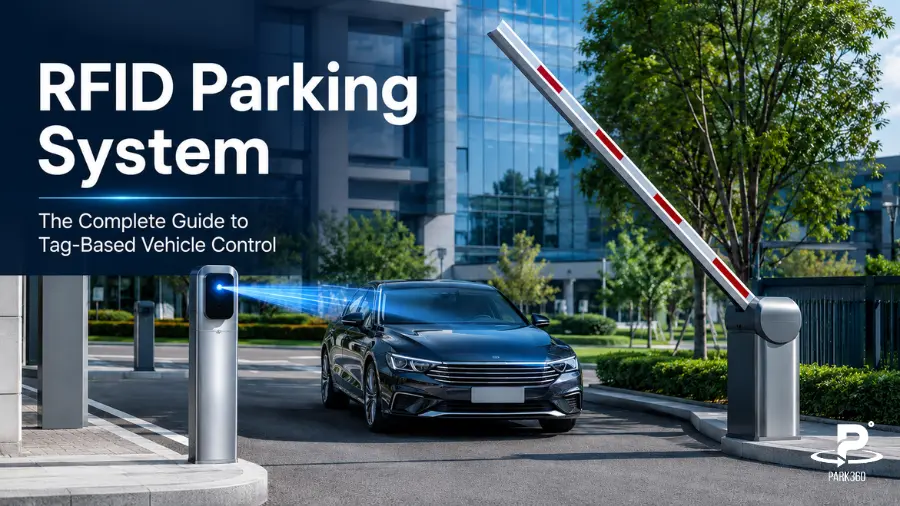
Managing vehicle entry and exit may look simple from the outside. A car arrives, the guard checks the details, the barrier opens, and the vehicle enters. But for residential societies, corporate campuses, hospitals, malls, logistics hubs, and industrial facilities, this everyday process can quickly become a source of delay, confusion, security gaps, and poor user experience. An RFID Parking System addresses these challenges — replacing slow, error-prone manual gate operations with fast, contactless, tag-based vehicle access that works reliably at scale.
Manual gate operations depend heavily on guards, registers, stickers, phone calls, paper passes, and visual verification. During peak hours, this often leads to long queues, unauthorized access, missed entries, and incomplete records. For facilities where hundreds or thousands of vehicles move in and out every day, manual access control is no longer efficient enough.
This is where an RFID parking system becomes useful.
An RFID-based parking setup enables tag-based access control for vehicles. Each authorized vehicle is assigned an RFID tag, and when the vehicle approaches the gate, the RFID reader detects the tag, verifies access permission, and triggers the boom barrier automatically. The entire process is contactless, faster, and more reliable than traditional manual checks.
In this complete guide, we will explain what an RFID parking system is, how it works, where it is used, what benefits it offers, and how businesses can choose the right parking management system for their premises.
What is a RFID Parking System?
A RFID parking system is a tag-based vehicle access control solution that uses Radio Frequency Identification technology to identify authorized vehicles at entry and exit points.
In simple terms, every registered vehicle gets an RFID tag or sticker. This tag contains a unique identification code linked to the vehicle, owner, user type, access permission, and other details in the parking management software. When the vehicle comes near the gate, the RFID reader scans the tag and sends the information to the system for validation.
If the vehicle is authorized, the boom barrier opens automatically. If the tag is expired, blocked, unregistered, or invalid, the barrier remains closed and the security team can take the required action.
Unlike manual access control, RFID does not require the driver to stop, roll down the window, show an ID, collect a paper ticket, or wait for a guard to verify details manually. This makes it ideal for locations where the same set of vehicles enters and exits regularly.
How Does an RFID Parking System Work?
An RFID parking system works through a combination of tags, readers, controllers, boom barriers, and parking management software. While the backend process is technical, the user experience is simple and seamless.
1. RFID Tag Is Assigned to the Vehicle
The process starts by registering the vehicle in the parking management system. The admin enters details such as vehicle number, owner name, user category, access validity, parking zone, and permitted entry/exit gates.
Once the vehicle is registered, an RFID tag or sticker is assigned to it. This tag is usually placed on the vehicle windshield or another suitable location where it can be read easily by the RFID reader.
2. RFID Reader Detects the Tag at the Gate
When the vehicle approaches the entry or the exit gate, the RFID reader detects the tag. Depending on the technology and installation, the reader may work at a short range or long range.
For high-traffic locations, long-range RFID or UHF access control is often preferred because it allows faster identification without making the vehicle stop completely.
3. System Validates Vehicle Access
Once the tag is detected, the access controller or software checks whether the vehicle is allowed to enter or exit. The system can validate multiple conditions, such as whether the tag is active, whether the vehicle is registered, whether it has access to that specific gate, whether access is permitted at that time, and whether payment, subscription, or permit validity is active. This validation happens in seconds.
4. Boom Barrier Opens Automatically
If the vehicle is authorized, the automatic boom barrier access control system opens the gate without manual intervention. The driver can move ahead seamlessly.
If the vehicle is not authorized, the barrier remains closed. The system may notify the guard, show an alert on the dashboard, or record the rejected access attempt.
5. Entry and Exit Data Is Recorded
Every vehicle movement is recorded digitally. The system stores the vehicle number, tag ID, entry time, exit time, gate location, access status, and other relevant details.
This gives facility managers a clear audit trail of vehicle movement, which is extremely useful for security, reporting, dispute resolution, and operational planning.
Key Components of an RFID Parking Management System
A reliable RFID parking system is not just about tags. It requires multiple components to work together.
RFID Tags or Stickers
The RFID tag is the identity of the vehicle. It may be a windshield sticker, card, or tag fixed to the vehicle. Each tag carries a unique ID that is mapped to vehicle details in the software. This forms the foundation of tag-based access control.
RFID Reader
The RFID reader is installed near the entry or exit gate. Its job is to detect the tag and send the tag data to the controller or software.
Access Controller
The controller processes the tag information and decides whether access should be granted or denied. It acts as the bridge between the RFID reader, software, and barrier system — forming a complete authorized access solution.
Boom Barrier Gate
The boom barrier physically controls vehicle movement. Once the system validates an authorized tag, the automatic boom barrier access control opens the gate without any manual step.
Parking Management Software
The software is the brain of the system. A robust parking management system manages vehicle records, access permissions, reports, alerts, entry-exit logs, blacklists, user categories, and admin controls — all from a central dashboard.
Benefits of Using an RFID Parking System
Faster Vehicle Entry and Exit
An RFID parking system enables quick identification of registered vehicles. This reduces waiting time at gates, especially during office rush hours, school timings, mall peak hours, hospital shifts, and industrial dispatch periods.
Contactless and Convenient Access
Drivers do not need to stop for paper tickets, ID checks, manual approvals, or verbal confirmation. The tag-based access control approach allows vehicles to move through authorized gates with minimal friction — creating a better experience for employees, residents, doctors, staff, vendors, and regular users.
Better Security and Authorized Access
Manual gate control can be inconsistent. With RFID-based vehicle access control, only registered and authorized vehicles can enter. An authorized access solution ensures that unauthorized, expired, or blacklisted vehicles are blocked automatically — reducing the risk of human error.
Digital Entry and Exit Records
Every access event is recorded in the parking management system. This helps management teams track vehicle movement accurately — for residential monitoring, employee parking control, or vendor and truck tracking at industrial sites.
Reduced Manpower Dependency
RFID does not remove the need for security teams, but it reduces repetitive manual work. Guards can focus on exceptions, visitors, suspicious activity, and safety — rather than manually checking every regular vehicle.
Scalable for Large Premises
An RFID parking system can be scaled across multiple gates, parking zones, buildings, and sites — making it suitable for large campuses, townships, business parks, airports, logistics parks, and industrial units.
Where Can RFID Parking Systems Be Used?
Corporate Offices and IT Parks
Corporate campuses often deal with employee cars, two-wheelers, vendor vehicles, VIP vehicles, and visitor vehicles. An RFID parking system helps automate employee access and maintain accurate logs — supporting reserved parking, department-wise access, shift-based access, and multi-gate movement.
Malls and Commercial Complexes
Malls can use a vehicle parking management system to separate staff parking, tenant vehicles, vendor vehicles, delivery vehicles, and management vehicles from general customer parking — keeping authorized movement faster and more controlled.
Hospitals and Institutions
Hospitals need smooth access for doctors, staff, ambulances, emergency vehicles, vendors, and administrative teams. An authorized access solution ensures that critical vehicles are never delayed at the gate and can also support restricted zone access for staff-only areas.
Industrial Facilities and Logistics Hubs
Industrial sites often manage trucks, vendor vehicles, staff buses, employee vehicles, and contractor vehicles. RFID-based parking system access control can track authorized vehicles, reduce dependence on manual gate operations, and create a clear movement record. For factories, warehouses, and logistics hubs, it can also integrate with industrial gate automation and ERP workflows.
Residential Societies and Gated Communities
In housing societies, tag-based access control can be used for resident vehicles, staff vehicles, management vehicles, and authorized service vehicles. Residents can use RFID tags, while visitors can be managed through QR codes, mobile passes, or guard approval — delivering layered security without friction.
RFID Parking System vs UHF, FASTag, QR, and ANPR Parking
RFID vs UHF Access Control
UHF is a type of RFID technology designed for longer reading ranges. In parking, UHF access control is useful when vehicles need to be identified from a distance and move through gates faster — making it a good fit for high-traffic gates.
RFID vs FASTag Parking
FASTag-based parking uses the same tag infrastructure associated with toll payments in India. It is useful where vehicle identification and payment deduction need to work together. An RFID parking system, on the other hand, is more commonly used for authorized access control within private premises such as offices, societies, campuses, and industrial sites.
RFID vs QR Parking System
A QR parking system is useful for temporary, visitor, or mobile-based access. A visitor can receive a QR code on their phone and scan it at the gate or kiosk. RFID, however, is better suited for regular users who enter and exit frequently. Residents, employees, doctors, and staff members can use RFID tags, while visitors use a QR parking system for one-time or short-term entry.
RFID vs ANPR Parking System
ANPR parking systems use cameras to read vehicle number plates. RFID uses physical tags installed on vehicles. ANPR is useful when tagless access is required, while RFID is ideal when a facility wants controlled access through pre-issued tags. Many modern parking ecosystems use RFID and ANPR together for stronger verification.
RFID Boom Barrier Gate: Why Integration Matters
An RFID parking system becomes more powerful when it is integrated with a boom barrier gate. The RFID reader identifies the vehicle. The software validates the vehicle. The automatic boom barrier access control physically manages entry. Together, they create a reliable, end-to-end access control workflow.
Without proper integration, the process can still depend on manual intervention — reducing the speed and efficiency of the system. A well-integrated setup ensures that authorized vehicles move quickly, while unauthorized vehicles are stopped. This is especially important at high-traffic locations where even a few seconds of delay per vehicle can create long queues during peak hours.
Important Features to Look for in an RFID Parking System
Centralized Dashboard
The admin team should be able to manage vehicles, users, tags, gates, access rules, and reports from a central dashboard — a core feature of any strong parking management software.
Real-Time Vehicle Access Logs
The system should show real-time entry and exit records so that security teams can monitor vehicle movement accurately — an essential capability of any effective authorized access solution.
Blacklist and Whitelist Management
Admins should be able to approve authorized vehicles and block unauthorized or restricted vehicles instantly as part of the tag-based access control workflow.
Multi-Gate and Multi-Site Support
Large premises may have multiple entry and exit gates. A smart parking system should support access rules across different gates and locations.
Integration with Other Parking Technologies
A strong RFID parking system should integrate with ANPR, a QR parking system, FASTag, payment systems, visitor management systems, and automatic boom barrier access control.
Reports and Analytics
The software should provide useful reports on vehicle movement, peak-hour traffic, access violations, gate usage, and parking patterns.
Common Challenges in RFID Parking Implementation
Poor Tag Placement
If the tag is placed incorrectly, the reader may fail to detect it properly. Proper placement on the windshield or recommended area is essential for reliable tag-based access control.
Reader Range Issues
The choice of reader should depend on gate width, vehicle speed, lane design, and access control requirements — not all RFID readers have the same range.
Duplicate or Misused Tags
If tags are not controlled properly, they can be transferred or misused. A good authorized access solution maps each tag to a specific vehicle and allows admins to block suspicious activity instantly.
Lack of Software Integration
Hardware alone is not enough. Without proper software, reporting, access rules, and logs, RFID becomes just another gate device. A complete parking management system is required for full operational control.
Visitor Access Limitations
RFID is ideal for regular users, but visitors may need a different workflow. A QR parking system, ANPR, digital passes, or manual approval work better for one-time or short-duration visitors.
How to Choose the Right RFID Parking System for Your Facility
Choosing the right RFID parking system starts with understanding your site requirements.
First, evaluate your vehicle’s volume. A small housing society may need a simple tag-based access control setup, while a large business park or industrial facility may need multi-gate, multi-lane, and long-range access control.
Second, define user categories. Residents, employees, vendors, visitors, VIPs, contractors, trucks, ambulances, and staff vehicles may all need different access rules under your authorized access solution.
Third, check hardware compatibility. The RFID reader, tag type, controller, and automatic boom barrier access control system should be compatible with your gate layout and traffic pattern.
Fourth, evaluate the software. A parking management system should give your team clear visibility, admin control, logs, reports, and flexibility.
Finally, choose a provider that can support your current needs and future expansion.
Why PARK360 for RFID-Based Vehicle Access?
PARK360 helps facilities move from manual gate operations to smarter, more controlled vehicle access.
With RFID parking system management, facilities can automate authorized vehicle entry, reduce queue time, improve security, and maintain accurate digital records. PARK360’s ecosystem also supports UHF, FASTag, QR parking system, ANPR parking, automatic boom barrier access control, and broader parking management system workflows.
This makes PARK360 suitable for residential societies, corporate offices, hospitals, malls, institutions, industrial sites, and logistics facilities that need reliable, authorized access solutions.
Instead of treating RFID as a standalone device, PARK360 positions it as part of a complete smart parking system — helping decision-makers manage not just entry and exit, but also user permissions, vehicle data, access logs, reporting, and operational visibility.
Conclusion: Is an RFID Parking System Right for Your Premises?
An RFID parking system is a practical solution for facilities where regular authorized vehicles need fast, secure, and contactless access.
It reduces manual dependency, improves gate efficiency, strengthens tag-based access control, and gives administrators clear records of vehicle movement. Whether you manage a residential society, corporate campus, hospital, mall, or industrial facility, RFID can help create a more organized and reliable parking access experience.
However, the right implementation matters. Tags, readers, automatic boom barrier access control, controllers, and software must work together to deliver smooth performance. The system should also be scalable enough to support future needs such as ANPR, a QR parking system, FASTag, payment integration, and advanced reporting.
If your facility still depends on registers, manual stickers, guard approvals, or inconsistent vehicle checks, it may be time to upgrade.
To explore RFID-based vehicle access for your premises, connect with PARK360 and discover how a smart parking management system can make your entry and exit operations faster, safer, and more efficient.