Vehicle Access Control System: A Complete Guide for Facility Managers
A Vehicle Access Control System is an integrated hardware and software solution that identifies vehicles, verifies whether they are authorized to enter a facility, operates gates or boom barriers, and records every entry and exit digitally.
For facility managers, that definition is important because vehicle access control should not be viewed simply as gate automation.
The real objective is to establish a controlled process for answering four questions:
Which vehicle is approaching? Is it authorized? Should the gate open? Has the movement been recorded?
For corporate campuses, manufacturing plants, logistics hubs, warehouses, commercial properties, hospitals, airports, residential communities, and institutional facilities, those questions directly affect security, traffic flow, operational efficiency, and auditability.
Traditional processes based on guards, paper registers, windshield stickers, and phone-based approvals become increasingly difficult to manage as vehicle volumes grow.
Modern vehicle access control replaces these fragmented processes with a structured workflow:
Vehicle Identification → Authorization → Gate Control → Digital Logging → Centralized Monitoring
This guide explains how vehicle access control systems work, the technologies available, where they are used, their operational benefits, and what facility managers should evaluate before implementing one.
What Is a Vehicle Access Control System?
A Vehicle Access Control System is a technology-driven system used to identify, authenticate, authorize, and track vehicles entering or leaving controlled premises.
Depending on the facility, vehicle identification may be performed through:
- Automatic Number Plate Recognition (ANPR)
- RFID
- UHF RFID
- FASTag
- QR codes
- Digital visitor credentials
- Pre-registered vehicle databases
Once the vehicle is identified, the system checks its access permissions.
These permissions may depend on factors such as:
- Vehicle registration
- Employee or resident status
- Visitor approval
- Contractor validity
- Authorized gate
- Time of entry
- Access zone
- Vendor status
- ERP approval
- Payment status
If the conditions are satisfied, the system can automatically trigger a connected boom barrier, sliding gate, or other access-control equipment.
At the same time, it creates a digital record of the transaction.
This combination of vehicle identification, access logic, physical gate automation, and digital records is what differentiates a true vehicle access control system from a standalone boom barrier.
Why Facilities Are Moving Away From Manual Vehicle Entry
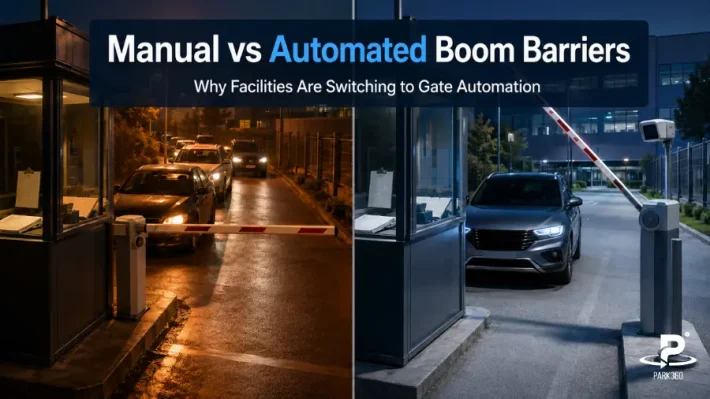
Manual gate management can appear inexpensive and straightforward. At scale, however, it creates operational weaknesses that are difficult to eliminate through manpower alone.
Manual Verification Creates Gate Congestion
Consider a typical visitor arriving at a corporate or industrial facility.
The security guard may need to:
- Stop the vehicle.
- Ask for identification.
- Check the vehicle number.
- Search for visitor details.
- Contact the host or department.
- Record the information.
- Approve entry.
- Open the gate.
A process that takes 30 seconds for one vehicle can create substantial congestion when dozens of vehicles arrive within a short period.
The issue becomes even more significant during:
- Office arrival hours
- Shift changes
- Contractor reporting times
- Dispatch windows
- Events
- Supplier delivery periods
Automated vehicle identification enables known and authorized vehicles to be processed without repeating the same manual verification at every visit.
Paper Registers Provide Weak Auditability
Handwritten gate registers often contain:
- Incorrect registration numbers
- Approximate timestamps
- Missing exit records
- Illegible handwriting
- Duplicate entries
- Incomplete visitor details
These records become particularly problematic during incident investigations.
If management needs to determine whether a specific vehicle entered the facility three weeks earlier, manually reviewing gate registers is neither efficient nor always reliable.
A digital vehicle entry management system creates searchable, timestamped records automatically.
Manual Access Depends on Human Judgement
Security personnel often become familiar with frequent visitors, employees, contractors, or vendor vehicles.
Familiarity can gradually replace formal verification.
An expired credential may be overlooked. A known vehicle may be allowed through without checking current authorization. A contractor whose permission has changed may still appear familiar to security personnel.
Automated vehicle access control applies access policies consistently.
Management Has Limited Real-Time Visibility
Facility managers should be able to answer questions such as:
- Which vehicles are currently inside the premises?
- When did a particular vehicle enter?
- Which gate did it use?
- Has a scheduled visitor arrived?
- Which contractor vehicles are still inside?
- How many unauthorized access attempts occurred today?
A centralized vehicle access control platform turns these questions into searchable operational data.
How Does a Vehicle Access Control System Work?
A modern gate access control system for vehicles generally follows five stages.
1. Vehicle Detection
The system detects that a vehicle is approaching the gate.
Detection can occur through technologies such as:
- ANPR cameras
- Loop detectors
- UHF readers
- RFID readers
- FASTag readers
- Vehicle detection sensors
2. Vehicle Identification
The system then establishes the vehicle’s identity.
Depending on the installation, the identifying credential may be:
- Registration plate
- RFID tag
- UHF windshield tag
- FASTag
- QR code
- Temporary digital credential
3. Authorization
Identification answers “Which vehicle is this?”
Authorization answers the more important question:
“Should this vehicle be allowed through this gate right now?”
The vehicle access management system can evaluate parameters such as:
- Whitelist status
- User association
- Visitor approval
- Contractor validity
- Access schedule
- Gate permissions
- Zone permissions
- ERP verification
- Payment status
- Delivery appointment
4. Gate Operation
If the authorization conditions are satisfied, the system sends a command to the connected gate controller.
The boom barrier or gate opens.
If access is denied, the system can keep the barrier closed and route the transaction to security personnel for verification.
5. Digital Access Record
The system records the event.
A vehicle access record may include:
- Vehicle registration
- Credential ID
- User or organization
- Entry time
- Exit time
- Gate location
- Access status
- Captured vehicle image
- Authorization method
- Operator intervention
This creates a complete digital audit trail of vehicle movement.
Vehicle Access Control Technologies
There is no single vehicle identification technology that is ideal for every facility.
Technology selection should depend on vehicle type, frequency of access, traffic volume, security requirements, and operational workflow.
1. ANPR Vehicle Access Control
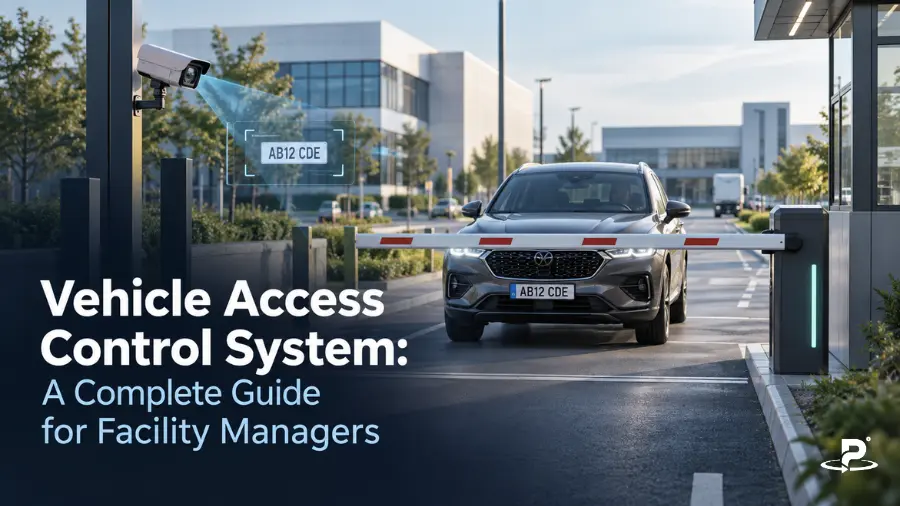
Automatic Number Plate Recognition (ANPR) identifies vehicles by reading their registration plates using specialized cameras and recognition software.
The detected number plate can be compared with an authorized vehicle database in real time.
If the vehicle is approved, the system can automatically open the barrier.
ANPR-based vehicle access control is commonly used in:
- Corporate campuses
- Commercial buildings
- Airports
- Shopping malls
- Residential communities
- Visitor parking
- Public parking
- Institutional facilities
One major advantage of ANPR is that the vehicle itself becomes the credential.
Drivers do not need to carry an additional card or windshield tag.
ANPR can also support visitor access. A visitor’s registration number can be added to the authorized list before arrival, enabling automated verification at the gate.
However, reliable ANPR performance depends on correct camera placement, lane geometry, lighting, vehicle speed, plate visibility, and image quality.
For this reason, an ANPR access-control deployment should be engineered specifically for the gate environment rather than treated as a conventional CCTV installation.
2. RFID and UHF Vehicle Access Control
RFID-based vehicle access uses an electronic tag assigned to a vehicle.
When the vehicle approaches the gate, an RFID or UHF reader detects the tag and sends its unique identifier to the access control software.
The system validates the credential and grants or rejects access.
UHF RFID vehicle access control is especially useful for recurring users because tags can be read from several metres away, enabling hands-free vehicle identification.
Common applications include:
- Employee parking
- Industrial plants
- Residential communities
- Logistics facilities
- Warehouses
- Contractor access
- Vendor vehicles
UHF is particularly effective where the majority of users are known and visit the facility regularly.
3. FASTag-Based Vehicle Access
FASTag can also function as a vehicle identification credential in compatible parking and access-control environments.
Because many vehicles already have a FASTag, facilities may be able to use an existing vehicle credential instead of issuing an additional RFID tag.
FASTag-based vehicle access can be relevant for:
- Corporate parking
- Commercial parking
- Business campuses
- Large parking facilities
- Controlled vehicle entry points
A properly designed system should determine not only whether a FASTag has been detected but also whether that credential is currently authorized for the specific gate or facility.
4. QR-Based Vehicle Access
QR codes are particularly effective for temporary access.
Instead of issuing permanent RFID tags to visitors, contractors, delivery personnel, or event attendees, the facility can generate a temporary QR credential.
The user presents the QR code at the gate, where it is validated against the access-control platform.
QR access is useful for:
- Visitors
- Contractors
- Vendors
- Temporary employees
- Events
- Delivery personnel
It can also be integrated with a Visitor Management System so that access approval takes place before the visitor arrives.
5. Hybrid Vehicle Access Control
Large facilities rarely have only one type of vehicle user.
A corporate campus may simultaneously handle employees, visitors, contractors, senior management, service vehicles, deliveries, and vendors.
Using one credential technology for all of them may be unnecessary.
A hybrid architecture could use:
Employees → UHF RFID
Visitors → ANPR or QR
VIP Vehicles → ANPR Whitelist
Contractors → Time-Limited RFID
Commercial Vehicles → ERP-Linked Access
Public Parking → FASTag or Ticketing
A centralized vehicle access control platform can bring all these technologies under one policy and reporting framework.
Key Components of a Vehicle Access Control System
A complete system generally contains five functional layers.
Vehicle Identification Layer
Devices responsible for identifying the approaching vehicle:
- ANPR cameras
- RFID readers
- UHF readers
- FASTag readers
- QR scanners
Physical Access Layer
Equipment controlling the actual vehicle movement:
- Boom barriers
- Sliding gates
- Swing gates
- Bollards
- Traffic signals
- Loop detectors
Access Control Layer
The controller receives the authorization decision and operates the physical equipment.
Software Layer
Vehicle access-control software typically manages:
- Vehicle databases
- User credentials
- Whitelists
- Blacklists
- Access schedules
- Visitor approvals
- Entry and exit records
- Alerts
- Reports
- Gate configurations
- Multiple sites
Integration Layer
Modern facilities often need the access-control system to communicate with other platforms.
These may include:
- Visitor Management Systems
- Parking Management Systems
- ERP
- HRMS
- Payment platforms
- Contractor management systems
- Building Management Systems
- Enterprise security systems
Integration enables access decisions to reflect real operational conditions rather than functioning as isolated gate permissions.
Where Are Vehicle Access Control Systems Used?
Corporate Offices and Business Parks
Corporate campuses may need different access policies for employees, visitors, vendors, contractors, and senior management.
Automated access helps reduce peak-hour congestion while maintaining traceability.
Industrial Plants and Manufacturing Facilities
Industrial gate access is often more complex than standard employee parking.
Entry may depend on:
- Vendor approval
- Delivery schedule
- ERP verification
- Payment confirmation
- Contractor validity
- Vehicle type
- Site permissions
Integrating vehicle access with enterprise systems can prevent unauthorized or unapproved vehicles from entering operational areas.
Warehouses and Logistics Facilities
At logistics facilities, the gate is part of the truck turnaround process.
A digital workflow can record:
Arrival → Verification → Entry → Operational Movement → Exit
This enables the facility to measure gate delays and overall vehicle turnaround more accurately.
Residential Communities
Registered resident vehicles can receive automatic access through RFID, UHF, or ANPR, while guests, delivery vehicles, and service providers follow controlled visitor workflows.
Airports and Transportation Facilities
Airports and transport hubs may require different vehicle permissions across parking areas, service zones, employee areas, and restricted operational sections.
Commercial Properties and Malls
A commercial property may need to simultaneously manage customers, employees, tenants, service vehicles, contractors, and vendors.
A unified parking access control system provides better visibility across these categories.
Benefits of Automated Vehicle Access Control
Faster Vehicle Throughput
Automated identification eliminates repeated manual verification for known vehicles and reduces gate processing time.
Stronger Access Governance
Access decisions are based on defined policies rather than familiarity or individual judgement.
Accurate Entry and Exit Records
System-generated timestamps provide significantly better traceability than handwritten registers.
Reduced Manual Work
Security teams can focus on unauthorized attempts, unusual events, and exceptions rather than verifying every routine vehicle.
Real-Time Visibility
Facility managers can monitor:
- Vehicles entering and exiting
- Vehicles currently inside
- Gate traffic
- Access exceptions
- Unauthorized attempts
- Peak movement periods
Improved Auditability
Historical vehicle records support security investigations, compliance reviews, contractor monitoring, and operational analysis.
Centralized Multi-Gate Management
Multiple gates, lanes, buildings, or facilities can be administered through a centralized system.
Vehicle Access Control vs Manual Gate Management
| Parameter | Manual Gate Management | Automated Vehicle Access Control |
| Vehicle identification | Security guard | ANPR, RFID, UHF, QR, FASTag |
| Access decision | Manual | Rules-based |
| Gate operation | Manual/semi-automatic | Automated |
| Records | Paper register | Digital logs |
| Timestamp | Manually entered | System generated |
| Unauthorized attempts | Difficult to track | Recorded and flagged |
| Reporting | Limited | Centralized |
| Multi-gate visibility | Fragmented | Unified |
| ERP/VMS integration | Limited | Supported |
How to Choose a Vehicle Access Control System
Facility managers should avoid beginning the project by selecting cameras, tags, or barriers.
The correct sequence is:
Operational Workflow → Vehicle Categories → Access Rules → Identification Technology → Hardware
1. Map Every Vehicle Category
Identify all users entering the facility:
- Employees
- Visitors
- Contractors
- Vendors
- Residents
- Delivery vehicles
- Commercial vehicles
- VIPs
2. Measure Traffic Patterns
Evaluate:
- Average vehicles per day
- Peak-hour traffic
- Number of gates
- Lane configuration
- Vehicle mix
- Entry and exit volumes
3. Match Technology to the Use Case
Use ANPR where registration numbers should act as credentials.
Use UHF/RFID for frequent registered vehicles.
Use QR codes for temporary users.
Use a hybrid system when the facility handles several vehicle categories.
4. Define Integration Requirements
Determine whether vehicle authorization must connect with:
- ERP
- HRMS
- Visitor management
- Parking management
- Payment systems
- Contractor management
- Existing boom barriers
5. Design Exception Workflows
Every automated system needs an exception strategy.
Plan for:
- Unreadable number plates
- Damaged tags
- Network failure
- Power failure
- Emergency vehicles
- Expired credentials
- Manual overrides
6. Plan for Future Scale
The architecture should support expansion from one gate to multiple gates or multiple sites without requiring a complete system redesign.
Common Vehicle Access Control Implementation Mistakes
The most common mistake is treating the project as a hardware procurement exercise.
A successful implementation starts with process design.
Other common mistakes include:
- Using one identification technology for every vehicle category
- Ignoring visitor and temporary vehicle workflows
- Failing to design exception handling
- Ignoring peak-hour throughput
- Operating parking and access systems independently
- Failing to consider ERP or HRMS integrations
- Overlooking reporting and audit requirements
- Choosing a system that cannot scale across multiple locations
The technology should support the facility’s operating model—not force the operating model to adapt to the technology.
What Should a Modern Vehicle Access Control Dashboard Provide?
A modern dashboard should provide facility and security teams with a single operational view of vehicle movement.
Important capabilities include:
- Live gate status
- Real-time entry and exit activity
- Vehicle search
- Whitelist management
- Blacklist management
- Visitor vehicle approvals
- Access schedules
- Credential management
- Unauthorized access alerts
- Gate-wise traffic analytics
- Multi-location monitoring
- User and role permissions
- Historical access records
The objective is not simply to digitize gate registers.
It is to make vehicle movement searchable, measurable, and manageable.
How PARK360 Enables Intelligent Vehicle Access Control
PARK360 provides integrated vehicle access and parking management technology for facilities that require more than standalone gate automation.
Depending on the operational requirement, a PARK360 deployment can combine:
- ANPR-based vehicle identification
- RFID and UHF access
- FASTag integration
- QR-based access
- Boom barrier automation
- Digital entry and exit tracking
- Visitor and contractor workflows
- Centralized access dashboards
- ERP and payment integrations
- Multi-gate and multi-site management
The advantage of this architecture is flexibility.
A corporate campus may use UHF for employees, ANPR for registered visitors, QR credentials for temporary visitors, and separate access rules for vendors.
An industrial facility may link commercial vehicle entry with ERP status, payment confirmation, scheduling, or other operational conditions.
The objective is to build an access-control workflow around how the facility actually operates.
Frequently Asked Questions
What is a Vehicle Access Control System?
A Vehicle Access Control System is a combination of hardware and software that identifies vehicles, verifies access permissions, controls gates or boom barriers, and records vehicle entry and exit. Technologies commonly used include ANPR, RFID, UHF RFID, FASTag, and QR codes.
How does vehicle access control work?
The system detects and identifies an approaching vehicle, verifies the vehicle against predefined access rules, opens the gate if authorization is valid, and automatically records the transaction.
Which technology is best for vehicle access control?
The appropriate technology depends on the application. ANPR is effective for plate-based identification, RFID and UHF are suitable for recurring vehicles, QR codes work well for temporary users, and hybrid systems are generally preferable for complex facilities.
Can ANPR automatically open a boom barrier?
Yes. An ANPR camera can identify a vehicle registration number, validate it against an authorized database, and trigger the connected boom barrier if access is approved.
What is UHF RFID vehicle access control?
UHF RFID vehicle access uses windshield or vehicle tags that can be detected from a distance by a UHF reader. The credential is validated by the access-control system before the gate is opened.
Can visitor vehicles be managed automatically?
Yes. Visitor vehicles can be pre-registered using their number plates or provided with temporary QR credentials. Their authorization can be validated automatically when they arrive.
Can vehicle access control integrate with ERP systems?
Yes. Vehicle access systems can integrate with ERP platforms so that gate permissions depend on operational conditions such as vendor approval, payment status, vehicle scheduling, or delivery authorization.
Conclusion
A Vehicle Access Control System should not be evaluated simply as an automated barrier.
It is an operational control system connecting vehicle identification, authorization, physical access, digital records, and enterprise workflows.
For facility managers, an effective system should answer three questions immediately:
Which vehicle is entering?
Is the vehicle currently authorized?
When did it enter and leave?
ANPR, RFID, UHF, FASTag, QR credentials, and boom barriers provide the technology required to automate the process.
The larger value comes from designing the correct access logic around the facility’s real-world operating requirements.
That is the difference between automating a gate and implementing intelligent vehicle access management.
Planning to automate vehicle access at your facility? PARK360 can help design an integrated vehicle access control solution combining identification technology, gate automation, centralized management, and enterprise integrations based on your site’s operational requirements.