
The PARK360 Intelligence Layer That Makes Warehouse Space Productive
India is building warehousing capacity with serious intent. Multi-story facilities, grade-A infrastructure, temperature-controlled zones, automation in picking and packing — the physical investment is real and substantial.
What completes that investment is an operational intelligence layer that makes the facility legible in real time: what is moving, where it is, who is handling it, when it arrived, and whether everything is proceeding as it should.
The 45–50 million square feet India is adding by 2026 represents an enormous opportunity — not just to store more goods, but to operate more intelligently. The facilities that build this intelligence layer in from the start will have a structural advantage that pure square footage cannot replicate.
The Operational Opportunity Hiding in Plain Sight
Modern large-format warehouses handle an extraordinary volume of simultaneous movement — trucks arriving at gates, material moving between zones, contractors and third-party workers entering and exiting, assets being deployed and retrieved across shifts. Each of these movements, when tracked and understood, becomes an intelligence asset. When they’re not tracked, they become a source of inefficiency that compounds across every shift, every day.
Here’s where operational intelligence can meaningfully elevate warehouse performance:
Gate Operations: From a Bottleneck to a Data Asset
A large distribution warehouse may process 80–150 truck movements a day. How long each truck waits, whether its documents are in order, whether it belongs to an approved vendor, how quickly it can be turned around — these are operational KPIs that directly affect throughput and vendor relationships.
ANPR-based vehicle authentication, integrated with vendor and logistics management systems, can transform the gate from a manual checkpoint into an intelligent entry point. Pre-registered vehicles are authenticated automatically. Unauthorized or unscheduled arrivals are flagged before they create congestion. Timestamps and dwell times are captured without manual logging.
The result: faster turns, better documentation, and gate-level data that operations teams can actually use.
Material Tracking: Making Inbound and Outbound Accountable
Material movement is the primary activity of any warehouse — yet the accuracy of what comes in and what goes out is often dependent on paper-based documentation, manual counts, or systems that update with significant lag.
RFID-based material tracking, camera-assisted movement monitoring, and weight-based verification at gates can create a real-time, verifiable record of every material transaction. Discrepancies between purchase orders, physical receipts, and dispatch records become visible as they occur — not at month-end reconciliation.
For pharma warehouses, FMCG distribution centers, and industrial logistics operations where material accountability carries regulatory or financial weight, this level of visibility isn’t just operationally valuable — it’s risk management.
People and Workforce Movement: Managing Complexity at Scale
Large warehouses typically operate with a mix of permanent staff, contractual labor, third-party logistics workers, and visiting vendors — all moving across the same facility simultaneously. Understanding who is on-site, which zones they’re authorized to access, and whether safety protocols are being followed is a meaningful operational challenge.
Access control integrated with workforce data, combined with camera-based PPE compliance monitoring and zone-level people tracking, creates the visibility needed to manage this complexity confidently. Safety audits become data-driven rather than observational. Contractor accountability improves. High-value or restricted zones can be monitored without requiring manual supervision at every point.
Asset Visibility: Knowing Where Equipment Actually Is
Forklifts, pallet jacks, weighing equipment, mobile scanning devices — warehouses run on moveable assets that are frequently misplaced, underutilized, or unavailable when needed. RFID-based asset tracking brings these assets into the same visibility layer as material and people, giving operations teams real-time location data and utilization patterns that support better planning and reduced idle time.
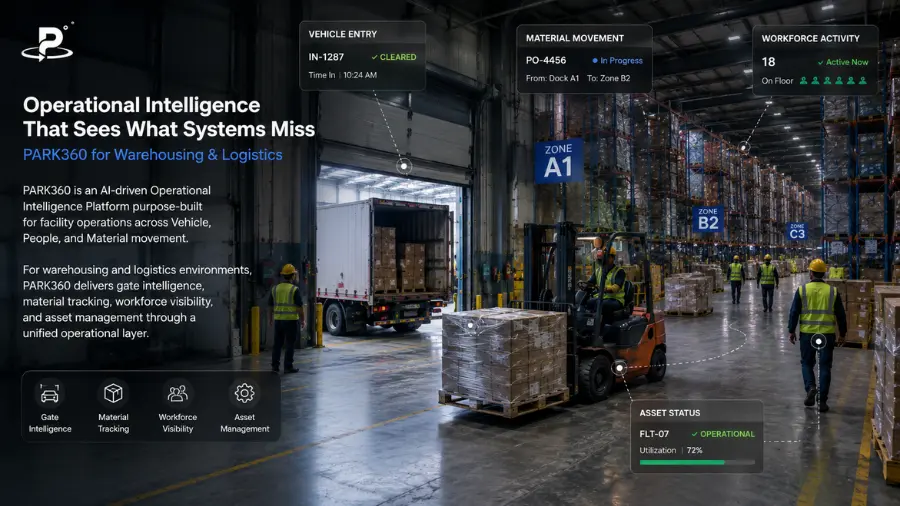
PARK360 is an AI-driven Operational Intelligence Platform purpose-built for facility operations across Vehicle, People, and Material movement. For warehousing and logistics environments, PARK360 delivers gate intelligence, material tracking, workforce visibility, and asset management through a unified operational layer.